Type B lactic acidosis.
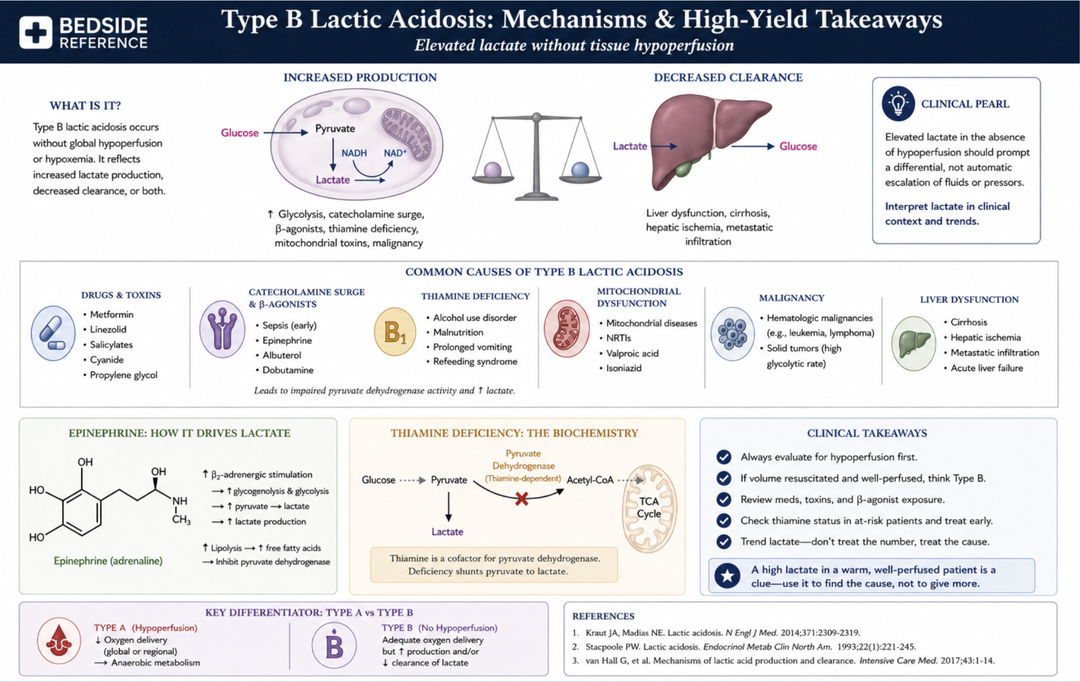
Elevated lactate without tissue hypoperfusion — increased production, decreased clearance, or both. It should prompt a differential, not automatic escalation of fluids or pressors.
Reviewed August 2026 · verify against current guidelines
Type B lactic acidosis.
Type B lactic acidosis occurs without global hypoperfusion or hypoxemia. It reflects increased lactate production, decreased clearance, or both — elevated lactate without tissue hypoperfusion.
The two mechanisms
| Mechanism | Drivers |
|---|---|
| Increased production | ↑ Glycolysis, catecholamine surge, β-agonists, thiamine deficiency, mitochondrial toxins, malignancy. |
| Decreased clearance | The liver converts lactate back to glucose. Liver dysfunction, cirrhosis, hepatic ischemia, metastatic infiltration. |
Common causes of type B lactic acidosis
| Category | Causes |
|---|---|
| Drugs & toxins | Metformin, linezolid, salicylates, cyanide, propylene glycol. |
| Catecholamine surge & β-agonists | Sepsis (early), epinephrine, albuterol, dobutamine. |
| Thiamine deficiency | Alcohol use disorder, malnutrition, prolonged vomiting, refeeding syndrome. |
| Mitochondrial dysfunction | Mitochondrial diseases, NRTIs, valproic acid, isoniazid. |
| Malignancy | Hematologic malignancies (eg, leukemia, lymphoma), solid tumors with high glycolytic rate. |
| Liver dysfunction | Cirrhosis, hepatic ischemia, metastatic infiltration, acute liver failure. |
Epinephrine: how it drives lactate
β2-adrenergic stimulation drives glycogenolysis and glycolysis — more pyruvate, more lactate production. Lipolysis raises free fatty acids, which inhibit pyruvate dehydrogenase.
Thiamine deficiency: the biochemistry
Thiamine is a cofactor for pyruvate dehydrogenase. Deficiency blocks the pyruvate-to-acetyl-CoA step and shunts pyruvate to lactate.
Key differentiator: type A vs type B
| Type A (hypoperfusion) | Type B (no hypoperfusion) |
|---|---|
| ↓ Oxygen delivery (global or regional) → anaerobic metabolism. | Adequate oxygen delivery, but ↑ production and/or ↓ clearance of lactate. |
Clinical takeaways
- Always evaluate for hypoperfusion first.
- If volume resuscitated and well-perfused, think type B.
- Review meds, toxins, and β-agonist exposure.
- Check thiamine status in at-risk patients and treat early.
- Trend lactate — don't treat the number, treat the cause.
Kraut JA, Madias NE, N Engl J Med 2014;371:2309–2319; Stacpoole PW, Endocrinol Metab Clin North Am 1993;22(1):221–245; van Hall G et al, Intensive Care Med 2017;43:1–14. Interpret lactate in clinical context and trends. Educational only — not medical advice.
Sources
Verify against current guidelines and local protocol before acting.
- Kraut & Madias, NEJM 2014 · Stacpoole, Endocrinol Metab Clin North Am 1993 · van Hall, Intensive Care Med 2017
Downloads
Every card for this topic — carousels and tables, print-ready for the wards or for sharing.